
Searching Lubbock County Criminal Dockets
Begin with the official Lubbock County Public Records Portal, the online index for unrestricted criminal records held by the District Clerk and County Clerk. Registration and email validation come first. An exact case number is the fastest query. Without one, narrow results with a party name, court, case type, and a tight date span. Results can list case details, parties, attorneys, and schedule data. Document images are not included.
The portal is not the only route. For a felony or district criminal file, call District Clerk archives at 806-775-1322, email dcarchives@lubbockcounty.gov, or use the Room 105 public terminal. For a county-court-at-law file, call the County Clerk at 806-775-1048, email countyclerk@lubbockcounty.gov, or use the Room 207 terminal. Statewide, reSearchTX supplements local coverage but proves nothing about completeness.
- Identify whether the case is felony, county misdemeanor, Class C, municipal, or federal.
- Search by full case number, then retry by name and a narrow date range.
- Match court, party role, charge, and filing date.
- Read each setting and disposition in sequence.
- Ask the proper clerk for any pleading or order the index cannot display.
The official portal landing screen shows where registered access begins.
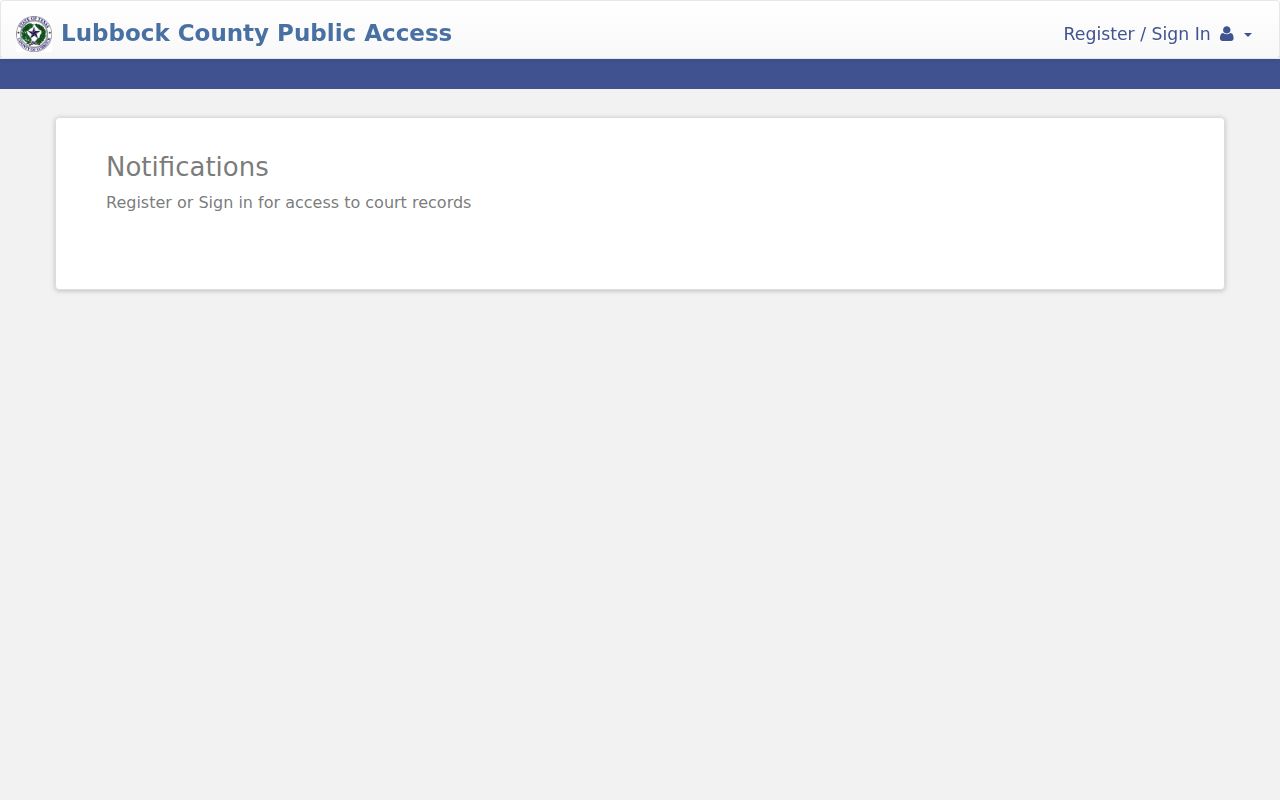
That screen finds cases; the clerk remains the source for the filed criminal record.
Lubbock Criminal Docket Custodians
No single office holds every Lubbock County criminal docket. Felony files stay with the District Clerk, who serves six District Courts. The County Clerk keeps the criminal files of County Courts at Law No. 1, No. 2, and No. 3. Justice and municipal courts hold their own fine-only Class C, traffic, parking, and ordinance records. That split matters. It is why a solid name search can still come up empty on the county portal.
| Case level | Custodian | Route |
|---|---|---|
| Felony | District Clerk | Portal, Room 105, archives |
| County Court at Law | County Clerk | Portal, Room 207, clerk |
| Class C or traffic | JP or city clerk | Individual court system |
| Federal | N.D. Texas clerk | PACER or RECAP |
The county courts directory helps identify the branch before a request.

Using the named court avoids sending a criminal docket request to the wrong clerk.
Inside a Lubbock County Criminal Docket
Think of a Lubbock County criminal docket as a timeline in rows. The header carries the court, case number, case type, filing date, status, and style. The event list carries what has happened since. Read the two parts together. Party and attorney sections assign roles, not proof of conduct. A setting may name the hearing, courtroom, judge, date, time, or a reset result. Financial fields can show bond, fines, costs, or payments. Even so, the public index is not a guaranteed full accounting.
| Case header | Court, number, type, opened date, status, and style. |
|---|---|
| Charge | Complaint, information, indictment, citation, or amended charge. |
| Parties | Role, displayed name, counsel, and representation data. |
| Settings | Arraignment, pretrial, hearing, plea, trial, or sentencing. |
| Events | Filings, bond activity, orders, rulings, and disposition. |
| Documents | Titles may appear, but county index images do not. |
Never read the latest date as the outcome. Settings pass or reset all the time. The disposition entry and the order behind it tell you the result.
Lubbock Criminal Docket Status Terms
Status words pack a lot into one line. Active or pending usually signals unfinished business. Disposed means an outcome was entered, yet it does not reveal whether that outcome was a plea, a judgment, a dismissal, an acquittal, or deferred resolution. A warrant entry concerns process only, and it is not a stand-in for guilt.
- Arraignment
- The event where the charge and plea process are addressed.
- Indictment
- A grand-jury charging instrument, not a conviction.
- Setting
- A scheduled event that may be reset, passed, or removed.
- Disposition
- The recorded outcome, such as judgment, dismissal, plea, or deferral.
- Restricted
- An access limit set by law or court order.
When a label confuses you, pull the entry or order behind it. The docket line points you there; the filed paper holds the real terms.
How a Criminal Case Moves
The docket opens with a complaint, referral, information, or indictment, depending on court and charge. From there it may record magistration, bond, a warrant, an appearance, and counsel. Arraignment gives way to pretrial work. That work covers discovery, motions, suppression hearings, plea talks, and trial settings. Each event marks one point in the case, never its final result.
Docket flow: Filing → Arraignment → Pretrial → Plea or Trial → Disposition → Sentencing
Disposition does not close the book. A Lubbock County criminal docket can keep going with probation, deferred disposition, or revocation. Appeal and other post-judgment events may follow too. Expunction, nondisclosure, and sealing are separate matters and may be restricted. A notice of appeal is not the appellate record itself. State appeals from Lubbock generally head to the Seventh Court of Appeals in Amarillo.
Lubbock Criminal Docket Filing Volume
County budget measures show why the clerk split matters. District Clerk criminal filings ran 2,578 in FY2022, 3,098 in FY2023, and 2,974 in FY2024. The projection for FY2025 is 3,300. County Clerk criminal cases totaled 2,412 in FY2022, 3,397 in FY2023, and 3,080 in FY2024. The FY2025 projection is 4,000. Treat these as office workload measures, not live totals or counts of unique defendants.
The figures cover two offices. They should not be merged into one database claim.
Courts That Hold Criminal Dockets
Felonies belong at the District Court level. Lubbock County has the 72nd, 99th, 137th, 140th, 237th, and 364th District Courts. Assignments follow state law plus the local Case Allocation Order. County Courts at Law hear the criminal matters that statute and local allocation assign them. A generic jurisdiction summary will not move a case. The case stays on the court already carrying its docket. The 72nd District Court page posts the court information used to confirm a district case.
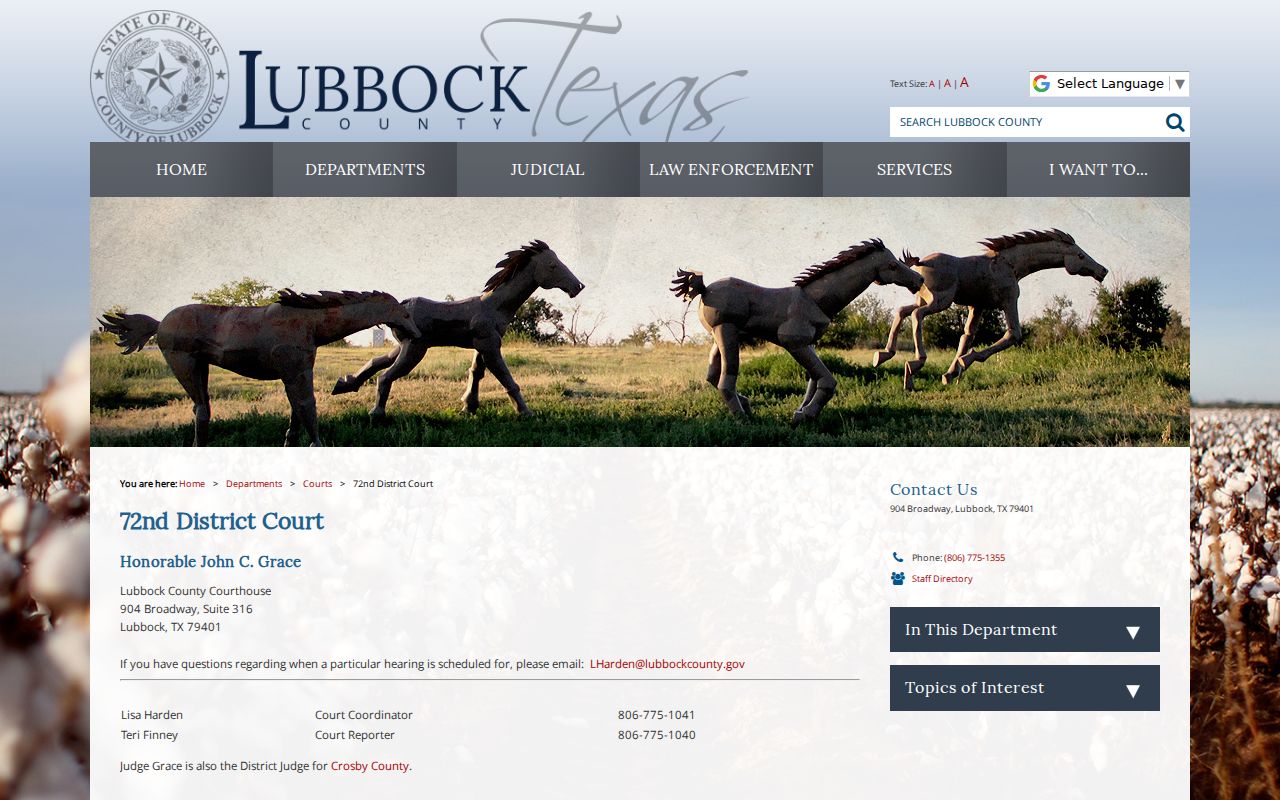
A court page can supply coordinator details when a setting needs confirming. Class C charges and city ordinances stay with the JP or municipal court. For county citation questions, use the proper precinct. Call 806-775-1548 or 806-775-1547. City of Lubbock matters go through its citation search or 806-775-2473. An empty district result never erases a lower-court case.
Lubbock Criminal Docket Date Checks
Every date on a Lubbock County criminal docket answers a different question. The filing date shows when a charging paper hit the file. Arraignment is a formal stage of its own. A pretrial or motion setting means scheduled work. A trial setting proves nothing about whether a trial actually happened. A disposition date marks an outcome entry. But you still have to read the entry itself to know what it says.
There is no single public calendar covering every trial court in Lubbock County. Court coordinators manage settings and hear about changes fastest. When you call, confirm the case number, court, judge, event, date, time, courtroom, and how to appear. The Lubbock County court dates resource covers setting checks in much more depth. Keep in mind that a future setting can shift on short notice. Check with the assigned court before you rely on the entry.
Charges Are Not Lubbock Outcomes
A charge is only an allegation. An indictment, information, complaint, or citation says what the state claims. It is not what a court decided. The Lubbock County criminal docket can list people in several roles. Common names invite false matches. Before drawing any conclusion, confirm the court, case number, charge, party role, and disposition.
Read the event sequence. A charge shows how a case began. Later entries and court orders show whether it was dismissed, deferred, tried, or resolved by plea.
Whether the matter is your own or a public case, verify the result with the clerk. That office holds the original court record.
Sealed Dockets and Public Access
The Lubbock County portal describes itself as an index of unrestricted clerk records. Even so, some items are restricted and images are missing. A terminal at the courthouse may allow lawful access that a registered account cannot. Ask whether an item is sealed. Ask whether it is restricted by law, blocked online only, or available in redacted form. Never try to bypass a restriction.
Texas access rules:
Government Code §552.0035 places judiciary records outside the ordinary Public Information Act route.
Rule of Judicial Administration 12 covers qualifying non-case judicial records.
Texas court rules include sealing and sensitive-data rules.
Family Code Chapter 58 protects juvenile records.
If a document is blocked, write down only what stays visible: the number, court, title, and date. Ask the clerk for the right procedure or a public order.
The 99th District Court page offers another official way to route a request.
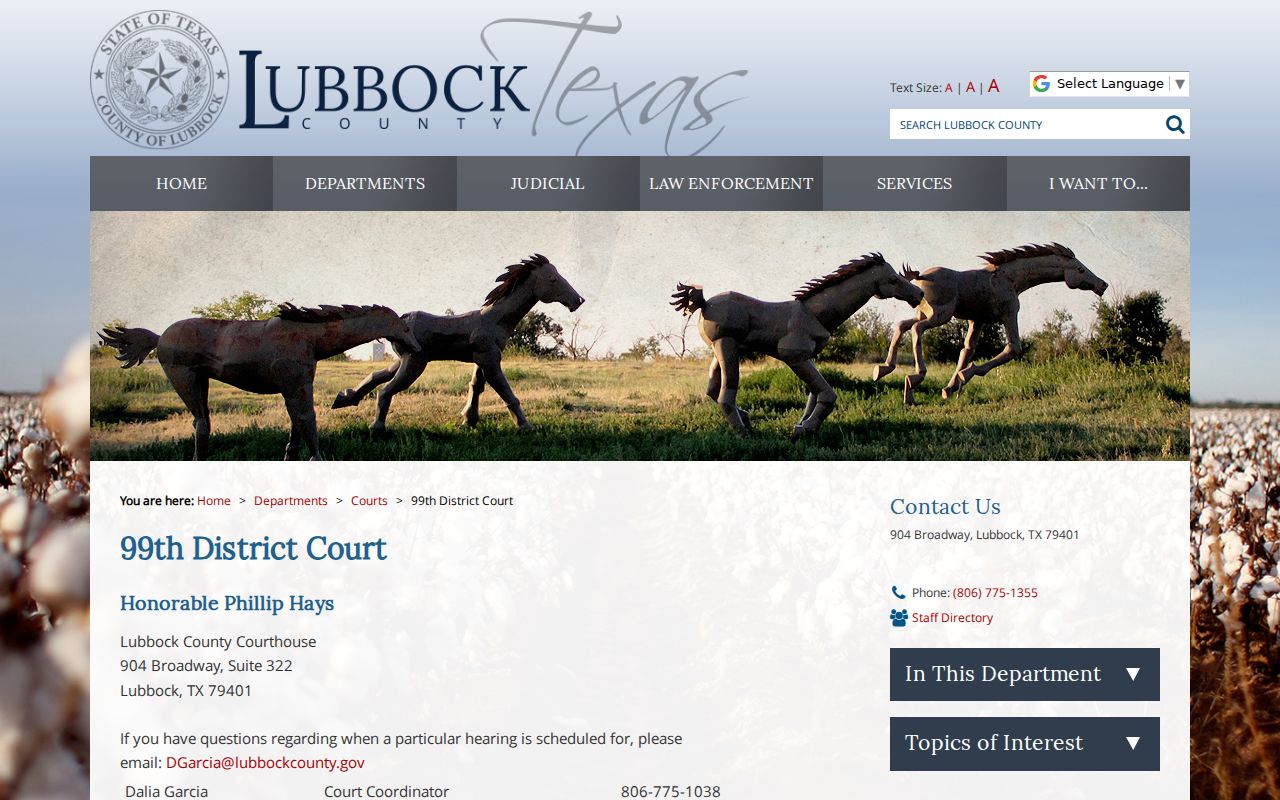
The assigned court and custodian control the next access step.