
Searching Lubbock County Civil Dockets
Start with the county Public Records Portal. It opens the District Clerk and County Clerk indexes to anyone. You must register and validate an email first. Case numbers matter here. Newer district civil cases carry the form DC-YYYY-CV-XXXX, so type the hyphens exactly. Family cases use DC-YYYY-FM-XXXX. Anything filed before August 2021 may show a ten-digit number or an A suffix instead.
Search by number first. A party-name search works better once you narrow it by court, case type, and date. The index returns case details, parties, attorneys, and scheduling data, though no document images. For district and family papers, contact District Clerk archives at 806-775-1322 or dcarchives@lubbockcounty.gov. You can also use the terminal in Room 105. County-court-at-law papers sit with the County Clerk at 806-775-1048 or countyclerk@lubbockcounty.gov in Room 207. Each justice of the peace keeps its own docket. reSearchTX serves only as a statewide supplement.
- Choose District Court, County Court at Law, family, probate, or the right JP.
- Enter the exact number with punctuation.
- Retry by party and narrow date span.
- Match court, style, type, and opened date.
- Ask the custodian for the actual paper.
Lubbock Civil Docket Court Routing
District Courts handle broad civil, land, family, and divorce matters. The District Clerk serves as custodian of the records. County Courts at Law take the civil categories that statute and local allocation assign them. Those cases are usually filed with the County Clerk. One local wrinkle deserves attention. Even when a County Court at Law hears a family case, Lubbock County points record seekers to the District Clerk. Justice Courts, finally, keep small-claim, limited civil, and eviction files precinct by precinct.
| Matter | Court | Office |
|---|---|---|
| Broad civil or land | District | District Clerk |
| Family | District or allocated CCL | District Clerk |
| Statutory civil or probate | CCL | County Clerk |
| Small claim or eviction | Justice | Precinct clerk |
The 137th District Court page identifies a named court.
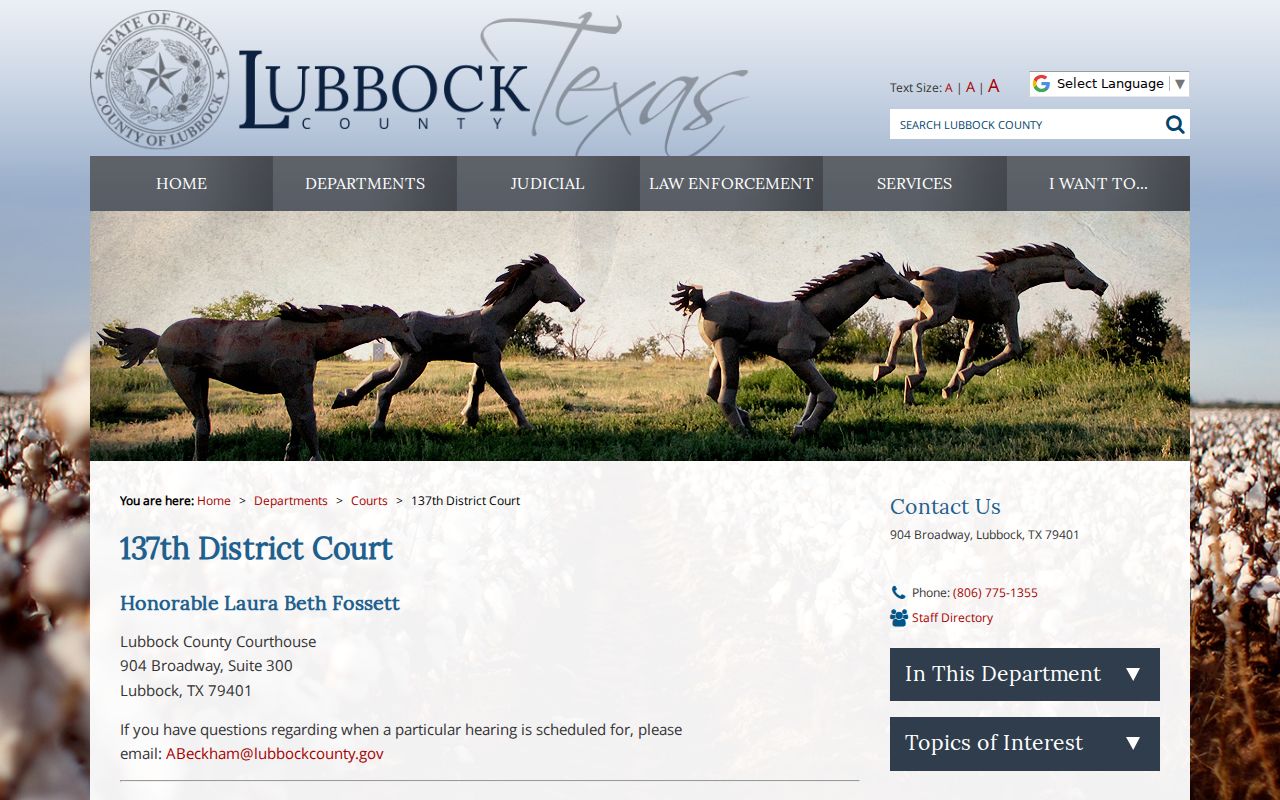
Court-specific contact data helps route a setting or file request.
Inside a Lubbock County Civil Docket
The header on a Lubbock County civil docket tells you the court, case number, type, style, filing date, and status. Below it, the event list walks through the life of the case. Party fields may list plaintiff, defendant, petitioner, respondent, and counsel. Settings can include date, time, event type, judge, courtroom, or a reset. Document titles often appear even when the images themselves do not.
| Number | Local identifier and case-type code. |
|---|---|
| Parties | Roles, names, and attorneys. |
| Filings | Petition, answer, service return, and notices. |
| Motions | Requests, responses, settings, and rulings. |
| Orders | Temporary, scheduling, agreed, and final orders. |
| Outcome | Judgment, dismissal, nonsuit, default, or appeal. |
A title alone is thin evidence. If the wording, the relief sought, a signature, or a certification matters to you, order the actual filing from the clerk.
Service on Lubbock Civil Dockets
Filing a petition starts the case, but it does not prove anyone was served. A Lubbock County civil docket can record each step on its own: citation issuance, a waiver, delivery by sheriff or private process, substituted service, certified mail, and the clerk's return. Read those entries in order. And remember that an unanswered petition, by itself, does not prove a default judgment was entered or proper.
- Service
- Formal delivery under the applicable rule.
- Return
- The filed record of delivery or an attempt.
- Answer
- A responding party's pleading.
- Default judgment
- A judgment entered after required steps.
- DWOP
- Dismissal for want of prosecution.
When a docket entry stays vague, pull the citation and the return. The index gives you the sequence; the papers give the detail.
Civil Case Types on the Docket
Civil filings in Lubbock County cover a wide span of disputes, from contracts and tort claims to fights over land and title. Family law takes up a large share of the civil docket, including divorce, SAPCR, temporary orders, modification, enforcement, adoption, termination, protective orders, and name changes. Some categories sit with the County Clerk, who handles probate, guardianship, and mental health cases. Justice Courts keep the smaller stuff, meaning limited civil matters, small claims, and evictions.
- Contract, debt, tort, and property disputes
- Divorce, SAPCR, modification, and enforcement
- Probate, guardianship, and mental-health cases
- Small claims and limited civil matters
- Evictions and related writs
The local JP description cites a $10,000 civil limit, but current Texas law controls. Confirm jurisdiction with the precinct clerk before you file.
Lubbock Civil Docket E-Filing Clues
Civil and family cases must go through eFileTexas. That system submits papers; it is not a tool for searching history. Acceptance determines which court a case lands in. Local choices explain some of the odd entries you will see on a docket. One quirk: exhibits to a petition must ride inside a single lead PDF. The District Clerk opted out of attachments. Once an envelope is accepted, you cannot edit in a missing signature or exhibit.
Watch the labels, too. Initial process carries the lead label "Application," while later process uses "Request." A hearing still needs its own notice or order to appear. So a filed petition proves no hearing date.
The 140th District Court page is an official reference from the court itself.
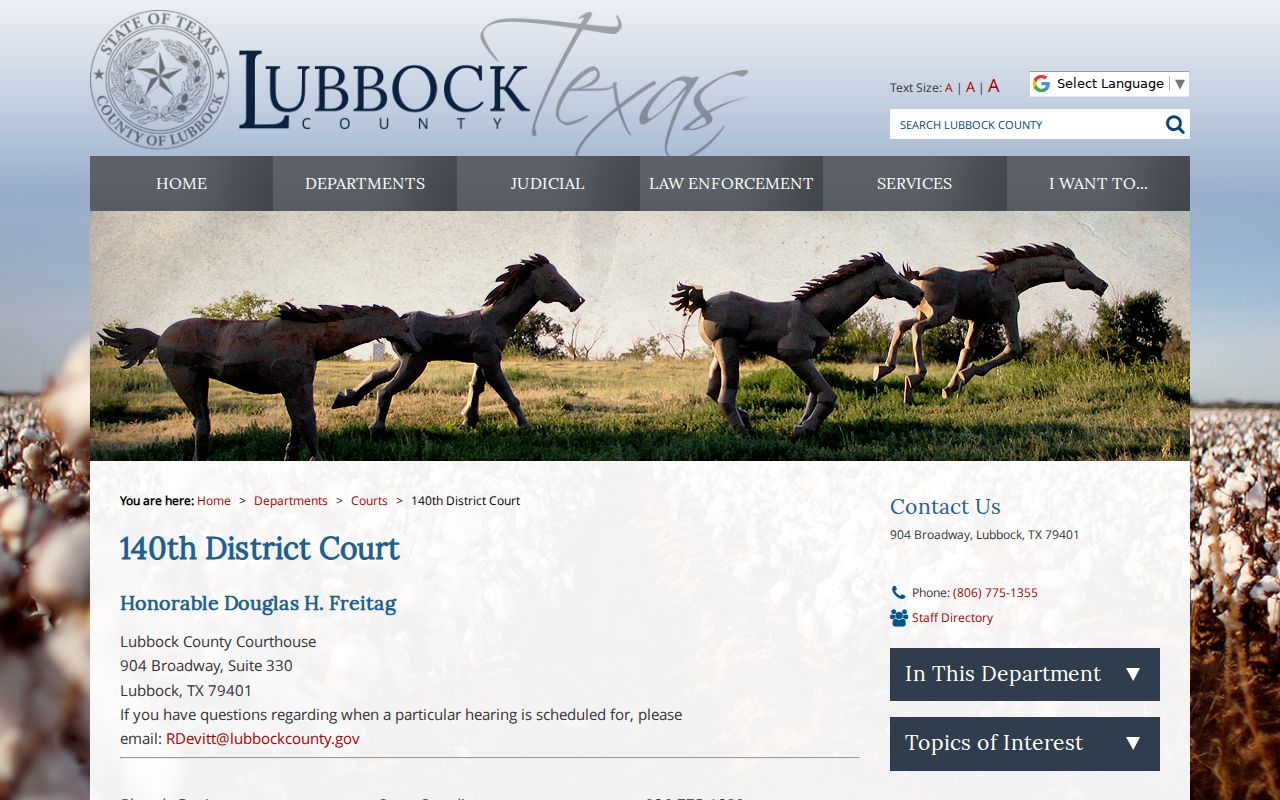
The named court source separates court administration from the filing vendor.
Lubbock Civil Docket Fee Choices
The District Clerk fee sheet effective September 1, 2025 sets $377 for a new civil case. A subsequent action costs $80. A set of other filings runs $350. That set includes certain interventions, counterclaims, cross-claims, third-party actions, new-trial motions, contempt, and nondisclosure matters. Family cases cost $392 new, except divorce without children, which is $377. Other family filing types vary.
| District Clerk copy | Amount |
|---|---|
| Paper | $1 per page |
| Electronic | $0.10 per page, $1 document minimum |
| Certification | Additional $5 |
| Exemplification | Additional $5 |
Ask about page count and copy type before you order anything. Also, treat these figures as District Clerk figures only; the County Clerk and JP fee tables are separate.
Civil Docket Settings and Hearings
A setting is planned work, not a result. A Lubbock County civil docket might list a motion hearing, a temporary-orders hearing, mediation, a pretrial conference, a bench trial, a jury trial, or a prove-up. Filing, hearing, and disposition dates are three different things. A trial setting proves no trial happened, and a reset does not mean dismissal.
No single public calendar covers the whole county. Coordinators handle docket logistics, so confirm the case number, judge, event, date, time, courtroom, and how to appear. Scheduling orders can bury deadlines the docket summary skips. For the full check path, see Lubbock County court dates.
The 237th District Court page offers a court-specific source.
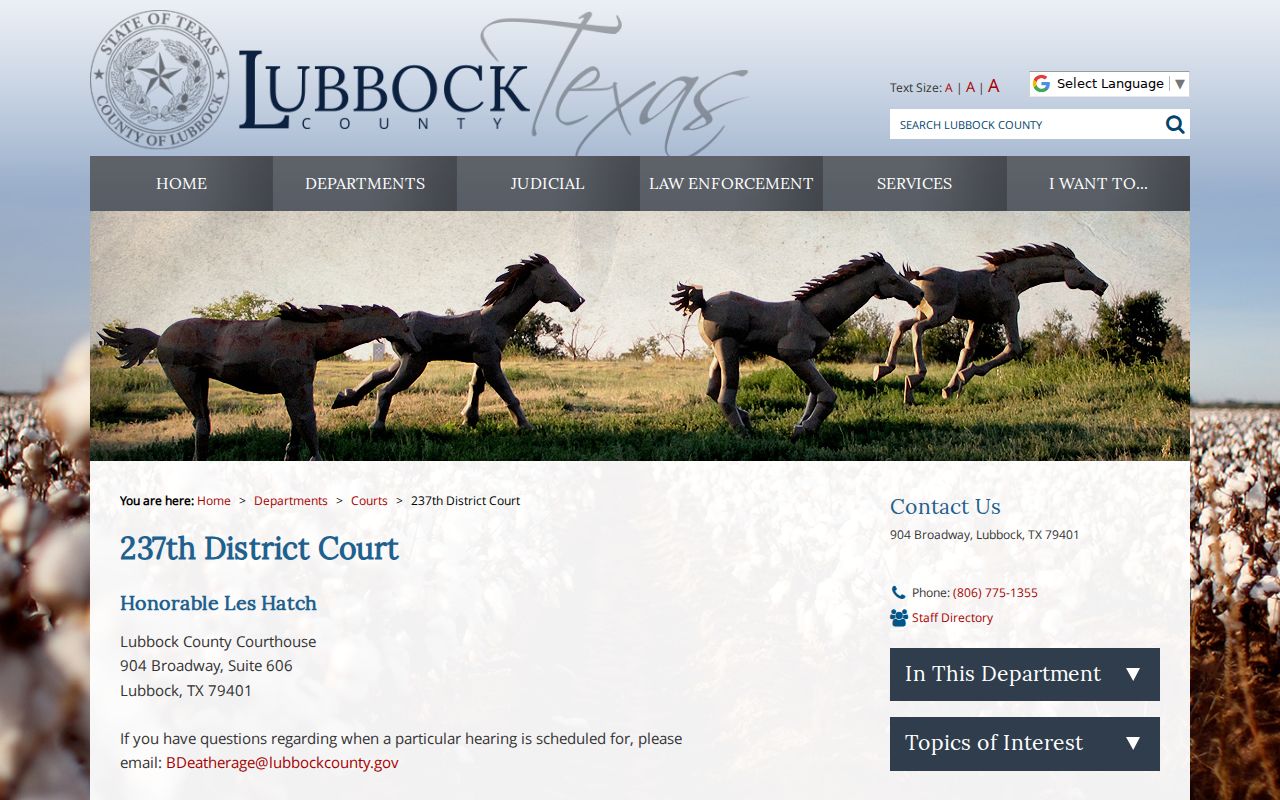
Direct court confirmation matters after a recent reset.
Lubbock Civil Docket Filing Volume
Budget numbers give context, not live counts. County Clerk civil cases ran 1,016 in FY2022, 1,250 in FY2023, and 1,107 in FY2024, with 1,400 projected for FY2025. District Clerk family filings held steadier: 2,677, then 2,724, then 2,789, with 2,820 projected for FY2025.
Numbers like these come from two different offices and two different record sets. Neither one counts every open civil case in Lubbock County. They still teach a practical lesson. A party-name search works best once you narrow it by court and date range. A broad sweep can mix files held by separate clerks. A current projection is easy to mistake for a lifetime case total. So treat any figure as a starting point. To test a specific number or style, go to the public index itself. Hit a result cap, or find an older file missing? The clerk can search archived records and legacy number formats by hand.
Family volume needs its own count. A Lubbock County family case may be heard in a county court at law. Yet the District Clerk still keeps the record. Follow the stated custody rule rather than guessing from the courtroom name. Where the case is heard and where the file sits are not always the same counter.
Civil Docket Access Rules
The county index covers unrestricted civil and family records. It also warns that some files are restricted. Access to a case is not access to every page inside it. A family file might hold protected addresses and a child's information. It may also hold medical material or sensitive financial facts. Rule 21c controls how sensitive data is handled, and Rule 76a governs sealing orders.
Start with the custodian. Government Code §552.0035 makes the Public Information Act an improper ordinary route for case files. Rule 12 covers qualifying non-case judicial records, while Texas court rules control sealing and sensitive data.
When an entry comes up blocked, write down what you can still see. Note the number, court, title, and date. Then ask the clerk a direct question. Is the file sealed, restricted, offline only, or available in redacted form? The 364th District Court page rounds out the assigned source set.
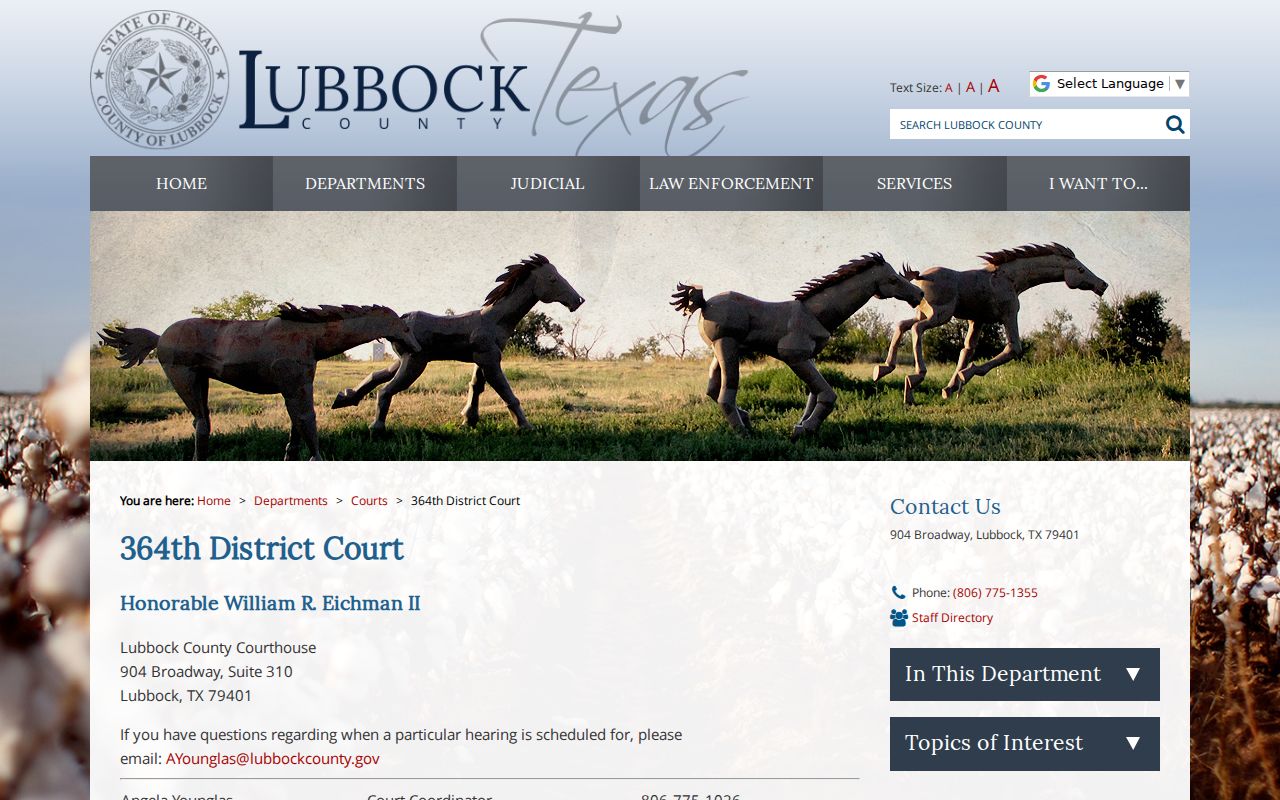
The court shown in the index controls the access route.